
Observe
Discovery is not proof. Potential signals enter a review lane with the original source and date preserved.
Built by Sustainable Gaps
Signal Engine monitors selected sources, preserves the original evidence, and prepares each bounded claim for human review before the team decides whether to research, pursue, monitor, hold, or stop.
Signal Engine Command
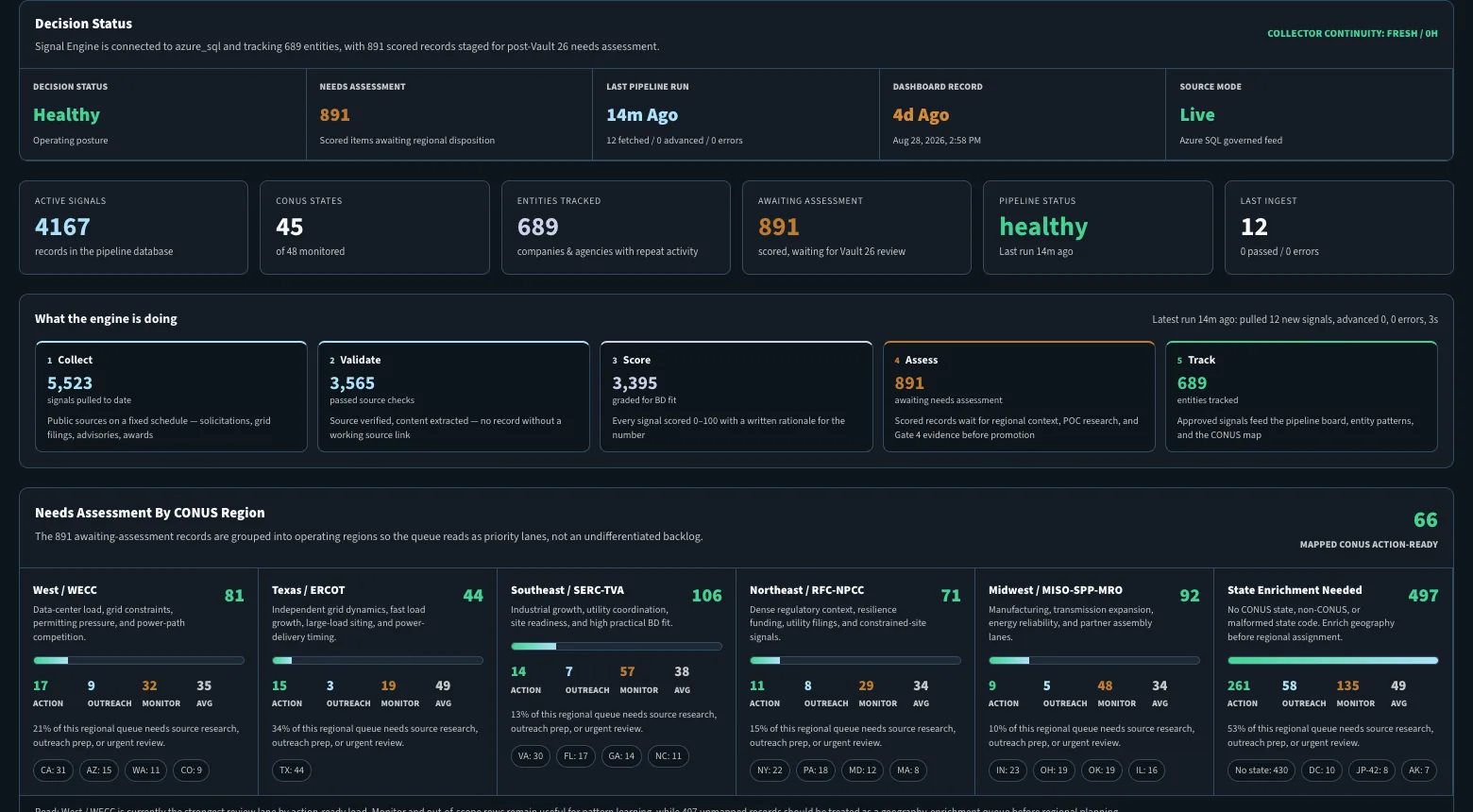
Governed product capture from September 1, 2026. Named records and internal release material are excluded.
Inspect all viewsA complete answer
Discovery is not proof. Potential signals enter a review lane with the original source and date preserved.
Independent sources are separated from repeated reporting, and conflicts remain visible instead of being averaged away.
A person determines what is supported, what is missing, and whether to pursue, monitor, hold, or stop.
Later outcomes are compared with earlier expectations without rewriting history, improving future qualification while preserving the record.
Operating proof
Each view connects its operating question to the inputs, scoring, decision, evidence, and work.
Capture
Evidence review
POC research
Promotion ready
Monitor
Review lanes
Separate research from action so low-priority patterns remain available and approved records stay visible.
Illustrative weekly workload
Model - not a quote
Apply this to your team
Enter staff, daily time, and pay. Nothing is saved.
24 h 56 m
workload represented by one illustrative weekly cycle
1,247 h
annual reference at 50 comparable weeks
How the time builds
This is a workload baseline, not a cost-reduction estimate. It does not mean every hour disappears. Human review, judgment, and relationship decisions remain necessary.
A source is a page SG monitors. A possible opportunity is an item found there; it becomes a lead after research and human review.
Decision intelligence
Turn a project claim into a testable decision.
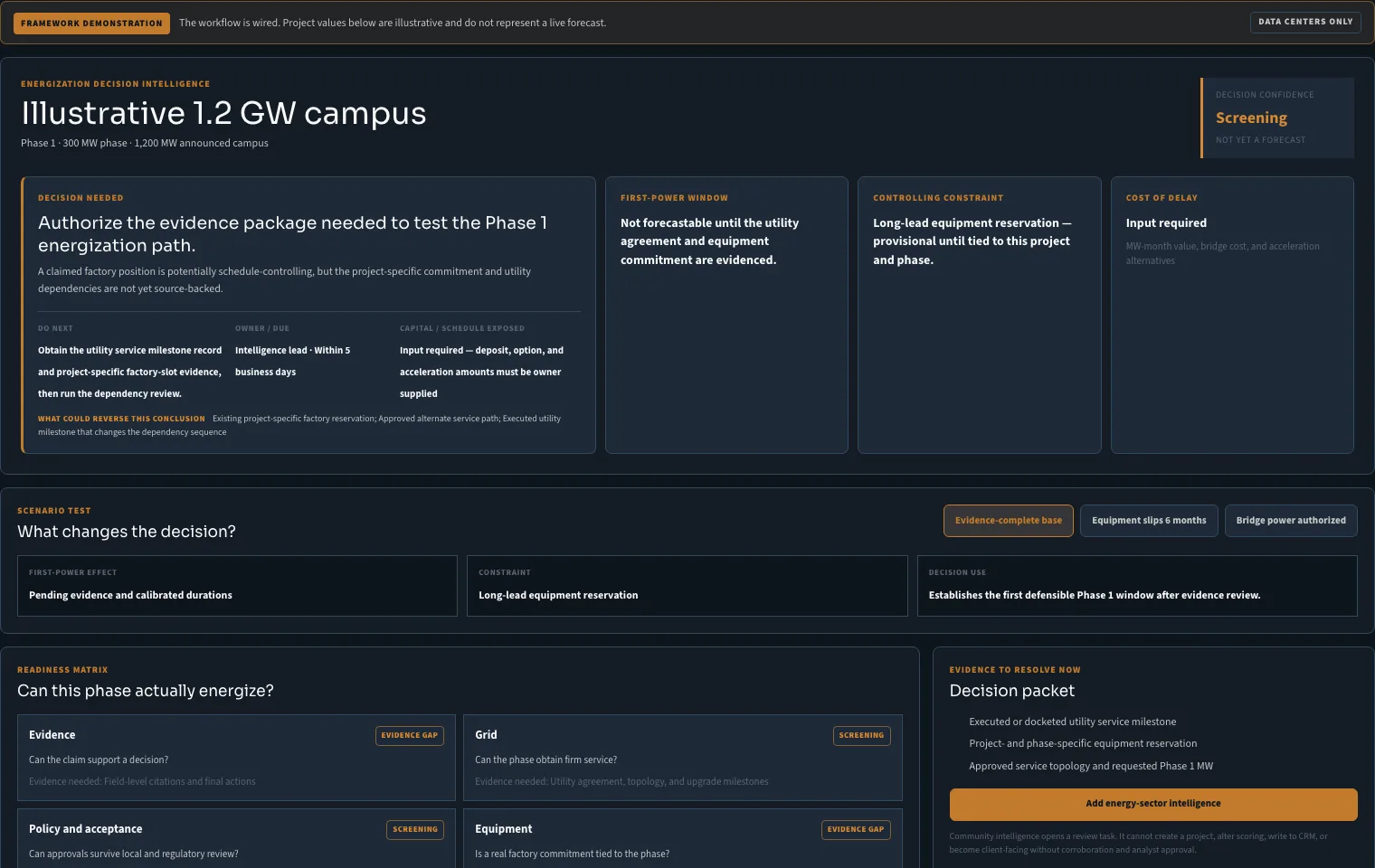
Captured September 1, 2026. Illustrative values; not a live forecast.
Guarded follow-through
Separate research and review from outreach.
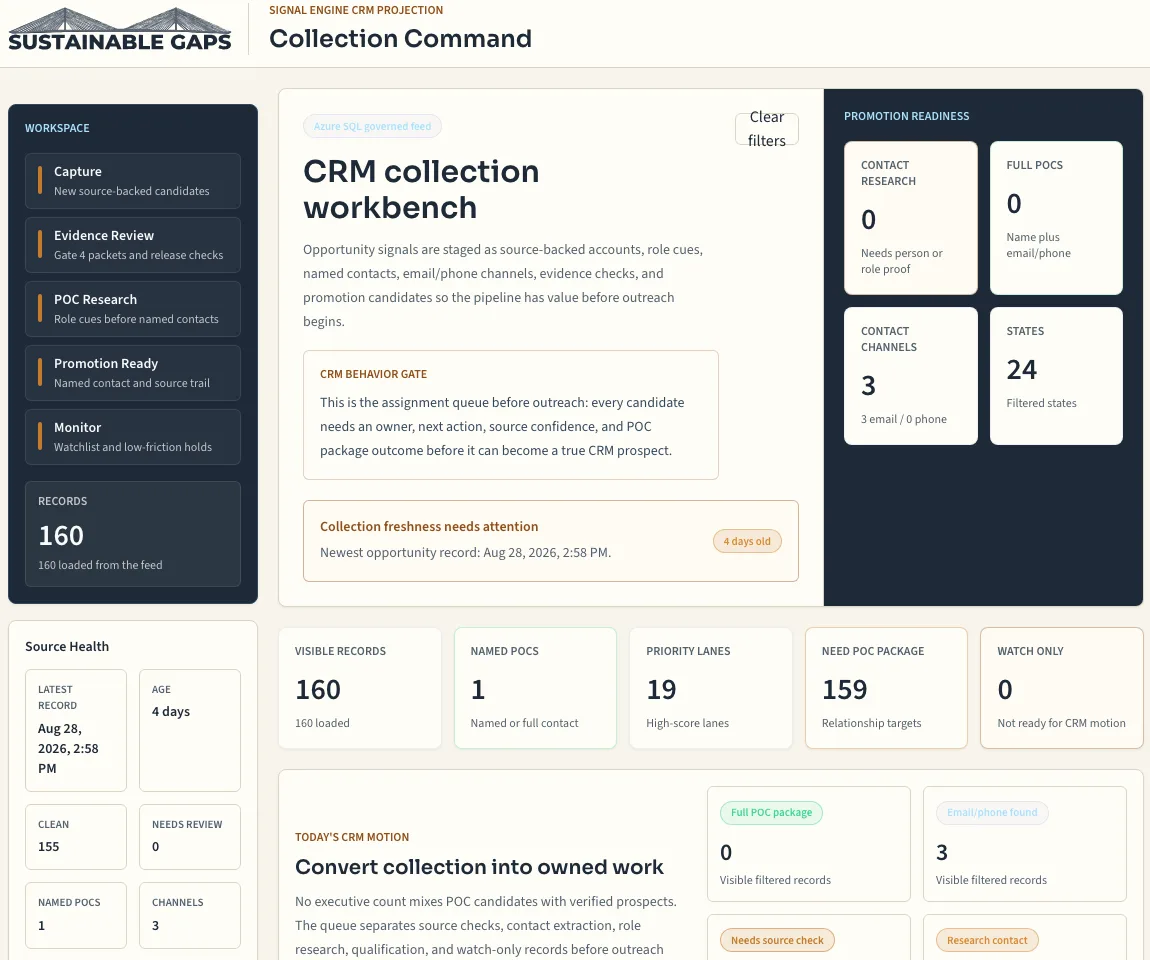
Captured September 1, 2026. Freshness warning retained; no personal contact details shown.
Configured around the client
Configure Signal Engine around the client's market, decisions, responsibilities, and technology. The interface adapts; evidence, human approval, governed records, and client ownership remain foundational.
What remains controlled
In SG's current implementation, Azure SQL holds the governed record. A client implementation uses the client's approved system of record, with Azure SQL as the reference pattern when appropriate.
The CRM action workspace, Power BI, and Microsoft Teams use approved views and handoffs without becoming separate decision authorities. SG builds within the client's approved environment, preserving client ownership and oversight of the work product.
How implementation begins
SG defines the sources, criteria, human review, records, and handoff with the client.